
Overview
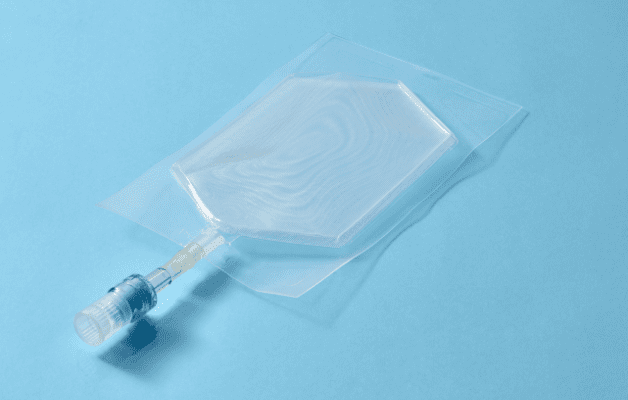
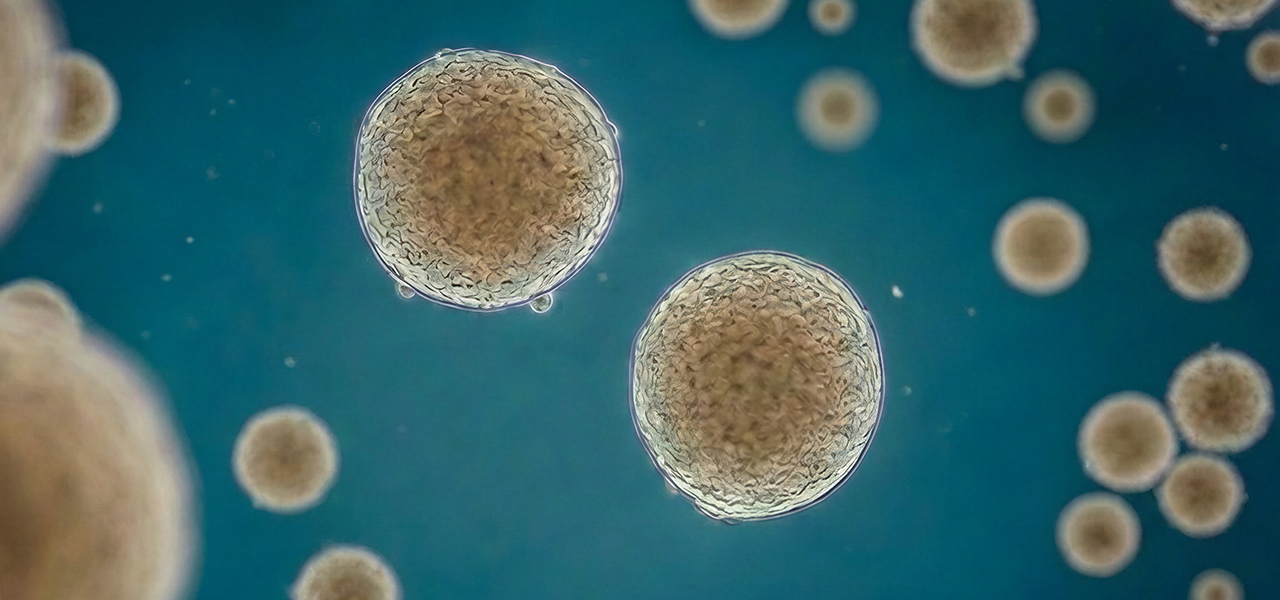
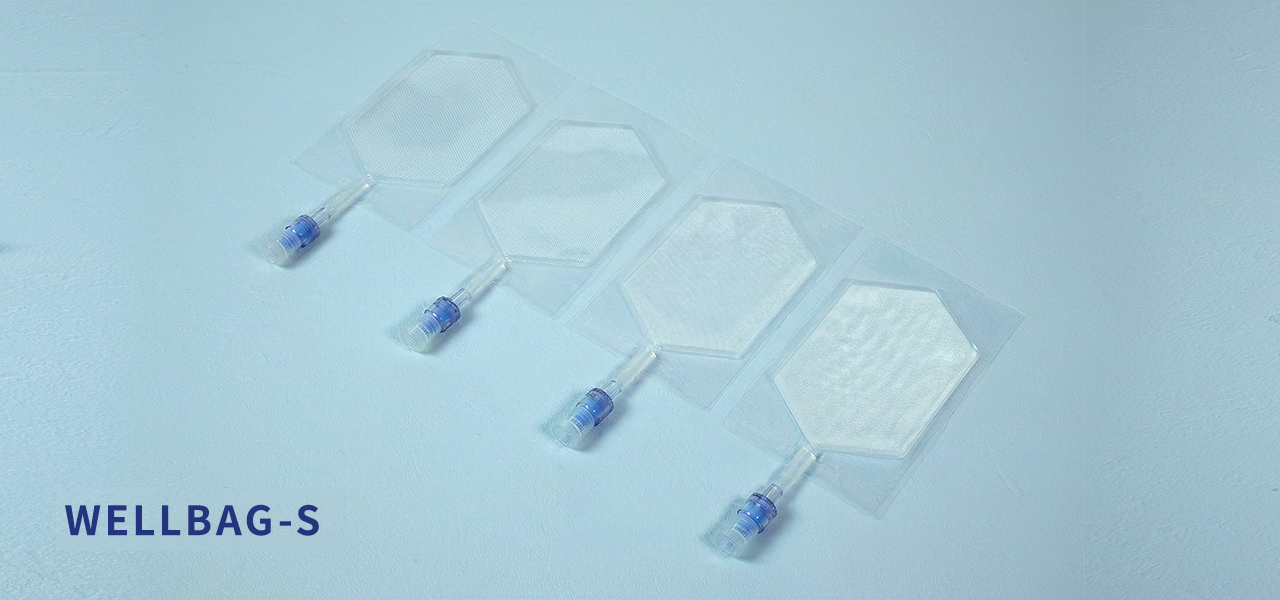
WELLBAG is a culture bag specially designed to culture spheroids uniformly in large quantities and to recover formed spheroids quite easily for various cells including iPS cells, which are used in regenerative medicine etc. This product is used by attaching to a dedicated holder.
WELLBAG-S500 has 18,000 microwells with a well diameter of 500um.
Lineup
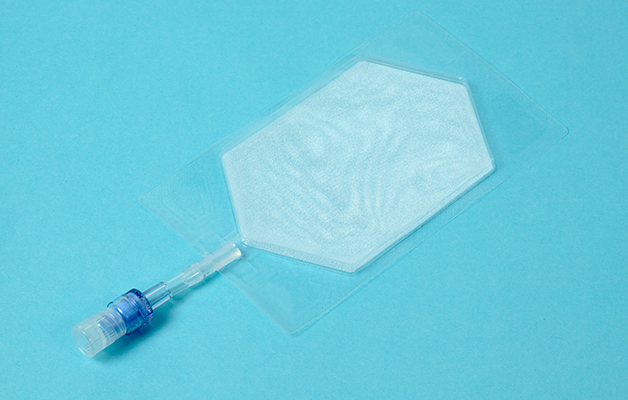
WELLBAG-S350
- Suitable for those who want to produce spheroids in large quantities.
- Ideal for pre-evaluation before scaling up to large well bags.
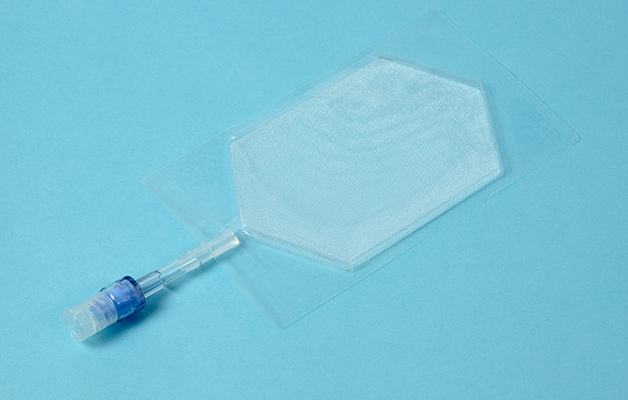
WELLBAG-S500
- Recommended for first-time users.
- By removing bubbles manually, work efficiency is greatly improved.
-
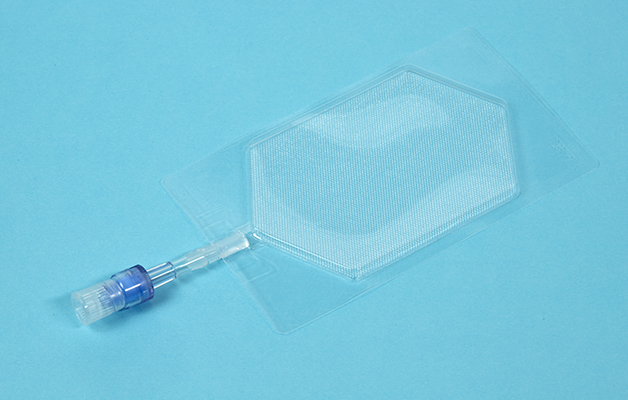
WELLBAG-S870
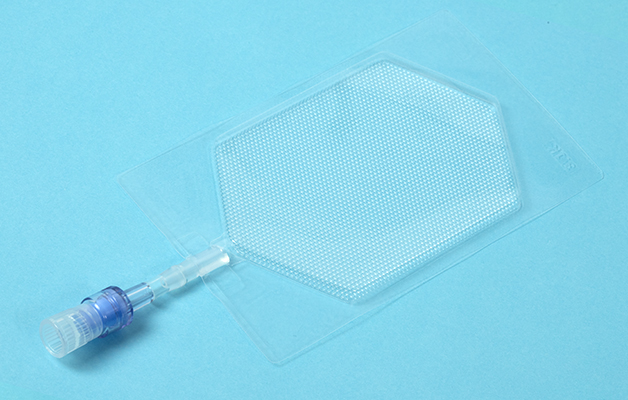
WELLBAG-S1260
- Suitable for those who want to produce spheroids larger than 500 μm in diameter, or those who want to produce a small number of spheroids.
Features
1. WELLBAG is a closed bag system which reduces the contamination risk of bacteria and foreign substances as opposed to “Open system containers”.
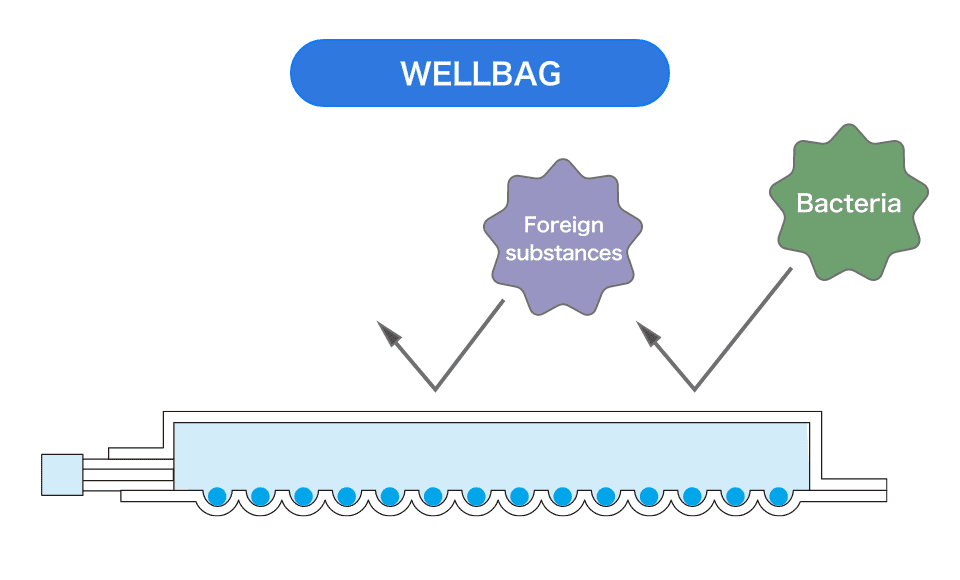
WELLBAG is a closed bag system which reduces the risk of contamination compared with open systems such as dishes and flasks.
2. Mass culture of uniformly sized spheroids
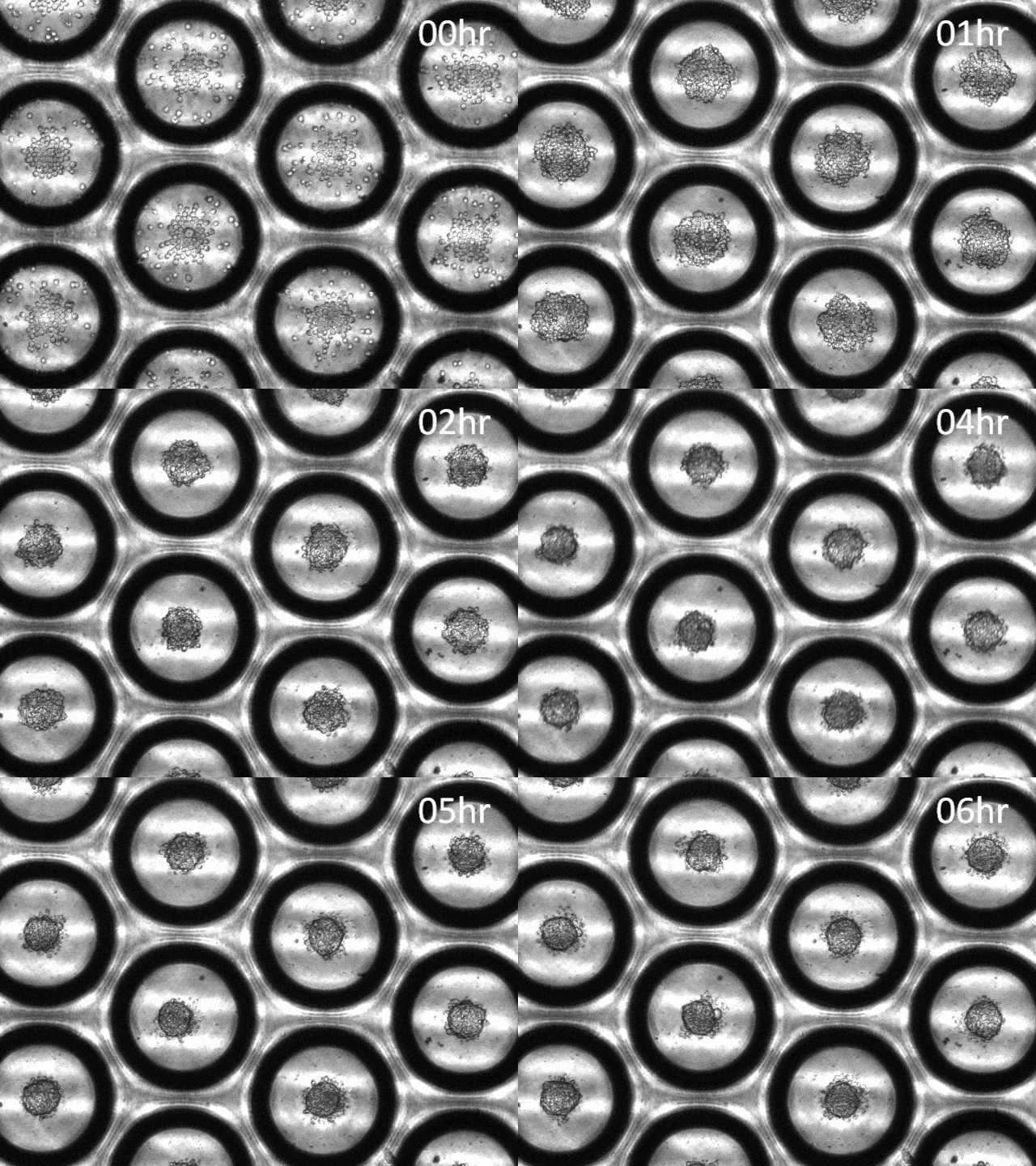
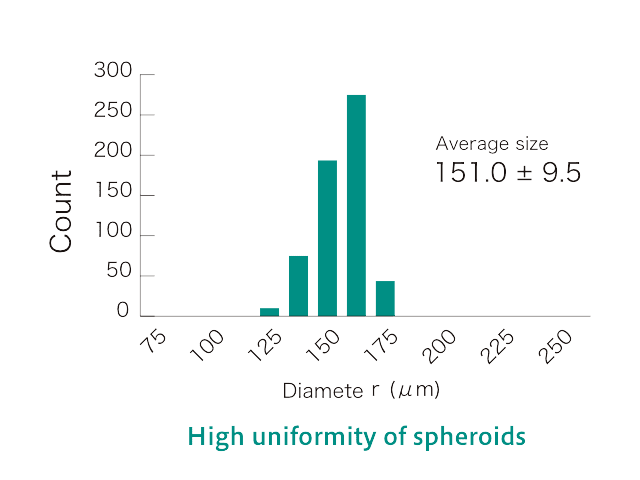
Fine, uniform microwells are formed on the bottom surface of WELLBAG with a non-cell-adhesive coating, while the top surface of WELLBAG has an overhang structure. When a cell suspension is injected into the bag through the injection port, it spreads almost evenly throughout the bag. By leaving it undisturbed, each microwell contains approximately the same number of cells. As a result, spheroids of uniform size are formed in each microwell.
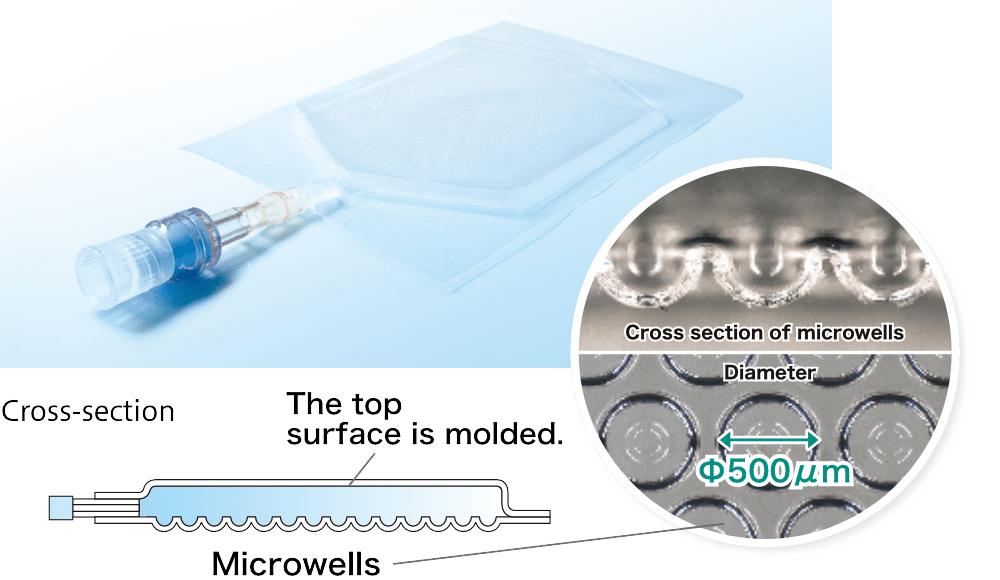
| Size | 72mm × 120mm |
|---|---|
| Material | Polyethylene with non-cell adhesion coating |
| Culture area | 50cm2 |
| Culture volume | 10〜20mL |
| Well diameter | 500μm |
| Number of wells | 約18,000 |
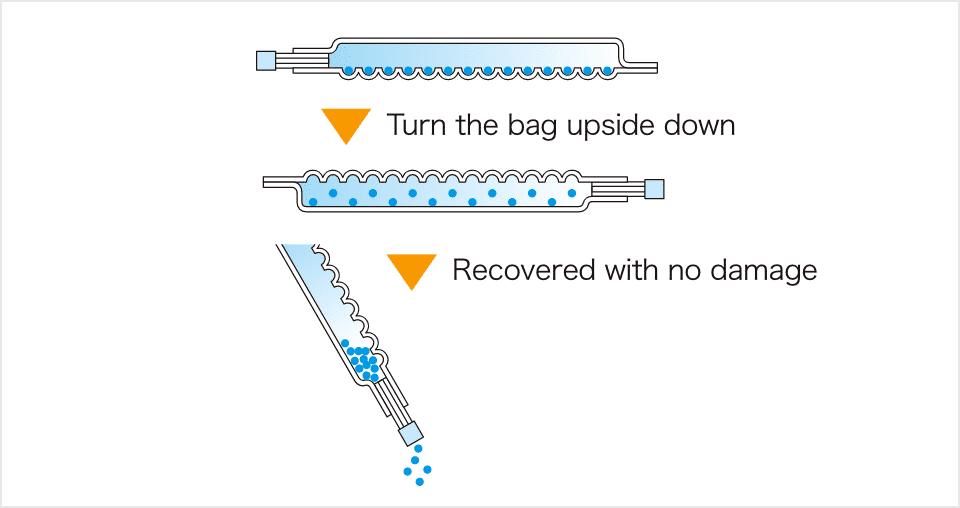
3. Spheroids can be easily collected after culture without being damaged during collection
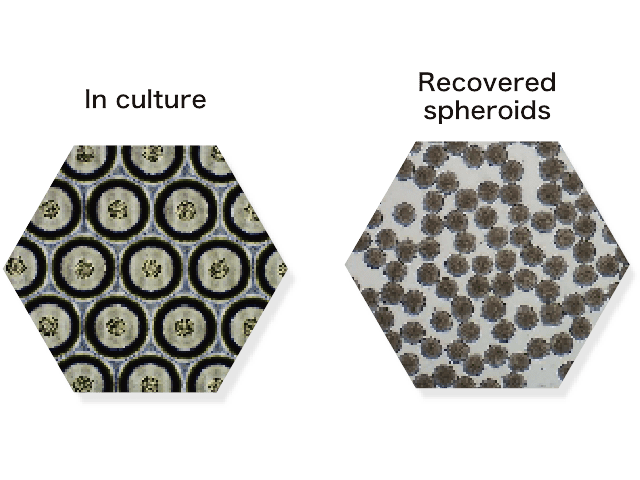
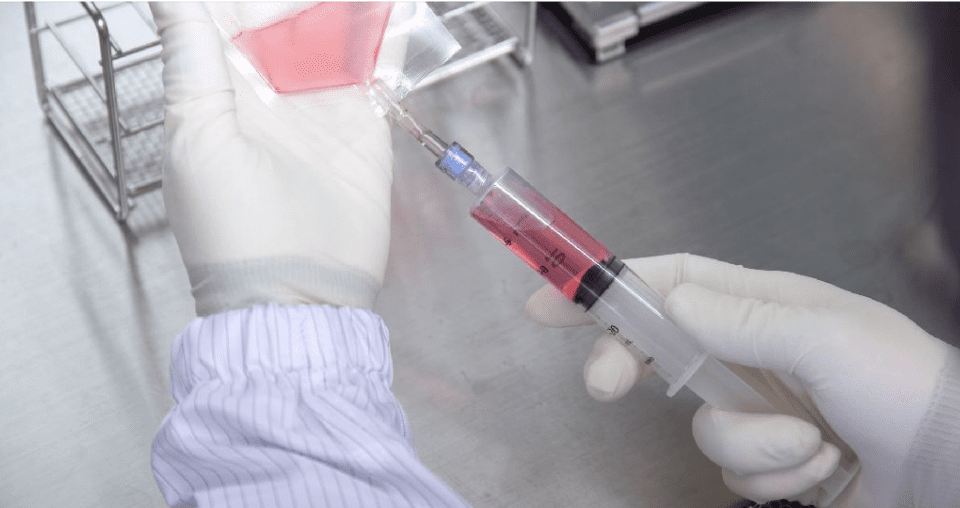
Turn the bag upside down to drop the formed spheroids, and then collect the spheroids with a syringe. Compared to conventional culture methods using petri dished, flasks, etc., it is much easier and can be recovered without damaging spheroids.
4. Efficient gas exchange due to high gas permeability film
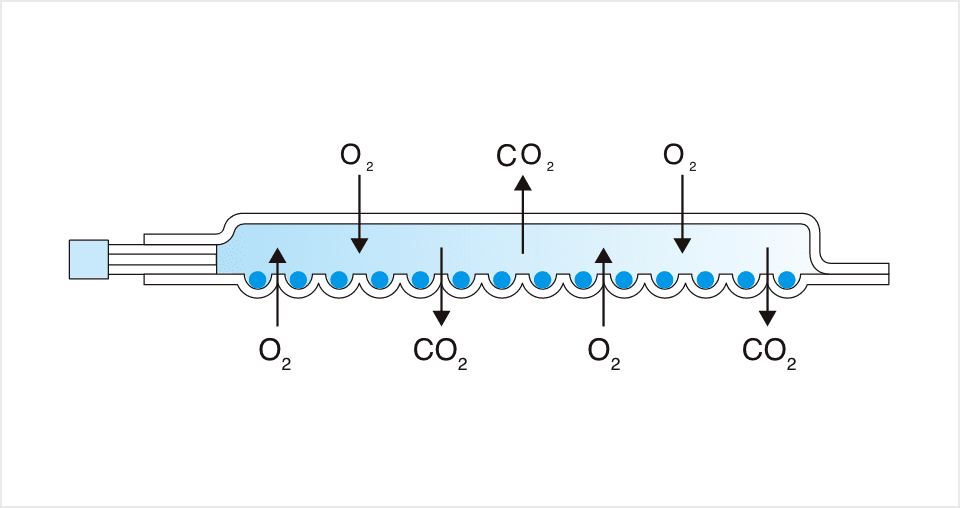
A high gas permeability film is used to ensure sufficient gas exchange of medium in a closed culture system.
5. High operability using a dedicated holder
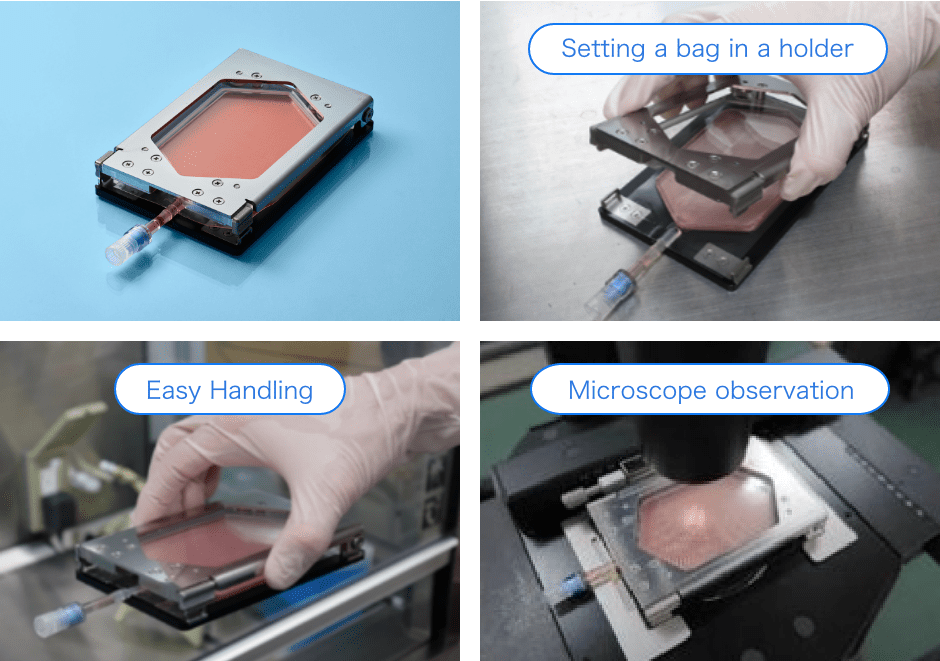
By attaching the WELLBAG to a dedicated holder, the movement of spheroids between wells is suppressed and portability becomes possible. Parts of the base plate and holding plate are transparent, allowing microscopic observation while attached.
| Size | W128mm × D86mm × H20mm |
|---|---|
| Materials | Aluminum, Tempered Glass, Stainless steel, Polycarbonate, others |
| Compatible bag | WELLBAG-S Series |
| Weight | 300g |
6. Safety standards according to the Japanese Pharmacopoeia
| Cytotoxicity test | Confirmed |
|---|---|
| Leachable test | Confirmed |
| Ashing test | Confirmed |
| Endotoxin test | Less than 0.25 EU/mL |
| Sterility | Radiation Sterilization |
7. Easy removal of air bubbles inside the wells
There are two ways to remove air bubbles, Manual method and Incubation method.
Product Numbers
WELLBAG-S Series
| Name | WELLBAG-S350 | WELLBAG-S500 | WELLBAG-S870 | WELLBAG-S1260 |
|---|---|---|---|---|
| Well diameter | 350μm | 500μm | 870μm | 1260μm |
| Number of wells | ca. 32,000 | ca. 18,000 | ca. 6,300 | ca. 3,100 |
| Well diameter appearance | Stamped with 32K 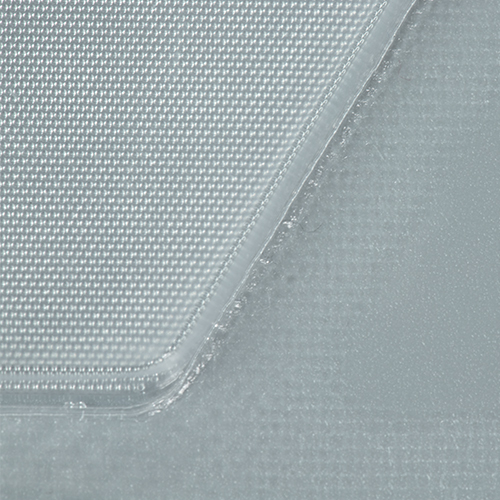 |
Stamped with 18 K 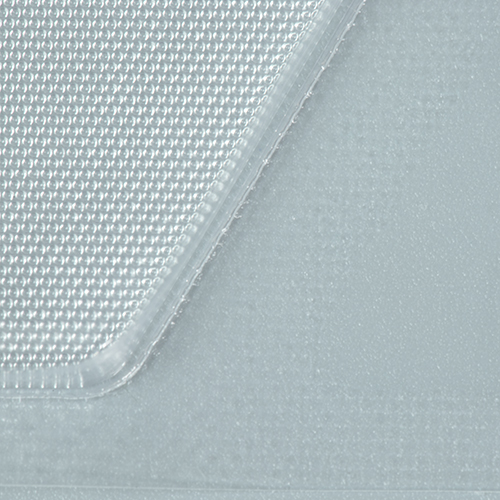 |
Stamped with 6.3 K 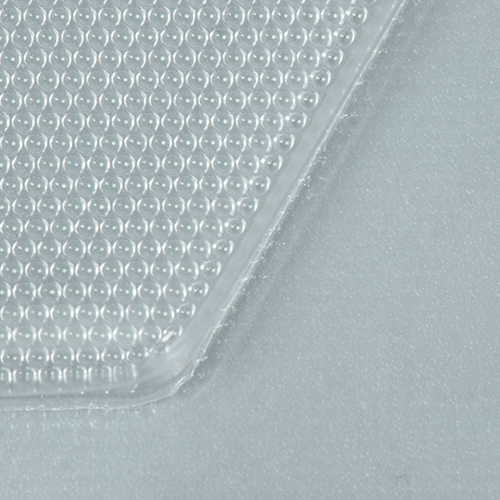 |
Stamped with 3.1 K 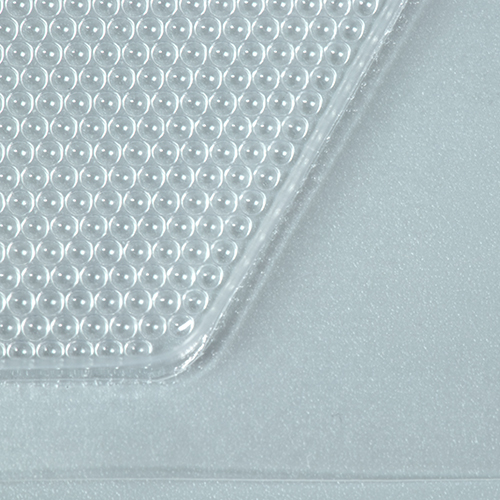 |
| Well cross-section | 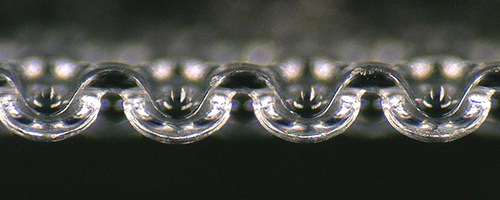 |
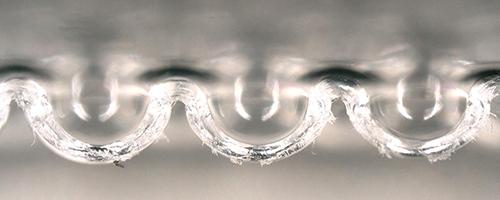 |
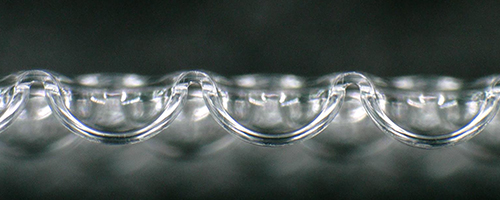 |
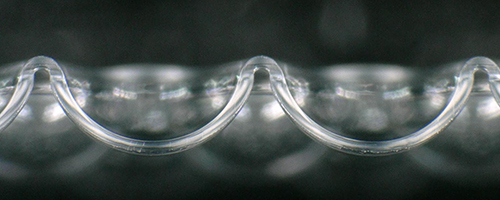 |
| Air bubble removal method | Incubation Method | Manual Method & Incubation Method | ||
| Outer dimensions | 72mm×120mm | |||
| Material | Polyethylene with non-cell adhesion coating | |||
| Culture area | 50cm² | |||
| Medium volume | 10〜20mL | |||
| Product number | 11020-05(5 bags) 11020-10(10 bags) 11020-00(100 bags) |
11000-05(5 bags) 11000-10(10 bags) 11000-00(100 bags) |
11040-05(5 bags) 11040-10(10 bags) 11040-00(100 bags) |
11060-05(5 bags) 11060-10(10 bags) 11060-00(100 bags) |
WELLBAG-S Dedicated Holder
| Name | Quantity (units) | Product number |
|---|---|---|
| WELLBAG-S Dedicated Holder | 1 | 61000-01 |
Product Documents
Brochure
Application
Videos
WELLBAG Intro Video
WELLBAG-S500 Operation Overview Video
FAQ
You can purchase it from our authorized distributors.
It is made of a high-gas-permeability grade of polyethylene.
Single use is recommended. From the perspectives of experimental reproducibility and sterility, reuse is not recommended.
We recommend using the dedicated holder. Using the holder helps keep spheroids from moving within the well and contributes to the formation of more uniformly sized spheroids.
No, it is not compatible with autoclave sterilization. We recommend disinfection with alcohol, hydrogen peroxide solution, or similar agents.
Please refer to the list here.
Because the microwells in WELLBAG-S350 are small, we recommend removing bubbles by the incubation method.
For larger WELLBAGs, such as WELLBAG-S500 and above, we recommend the manual method.
For details, please refer here.
No, it cannot. If medium exchange is required, we recommend using the cell culture system.
The cell types for which spheroid formation has currently been confirmed are listed below.
We have confirmed that cancer cells generally thought to have weak cell-cell adhesion (aggregation) properties, such as HepG2 cells, can also form cancer spheroids. This information is updated as needed, but please feel free to contact us even about cells that are not listed.
- iPS cells (derived from human peripheral blood cells)
- hMSC-BM cells (human bone marrow-derived mesenchymal stromal cells)
- Islet-like cells derived from iPS cells
- HepG2 cells (a cell line derived from human hepatocellular carcinoma)
- CHO-K1 cells (cells derived from Chinese hamster ovary)
Adjust the number of seeded cells per well according to the target spheroid diameter.
Below is an example using MSC cells. The figure shows spheroid formation when cells were seeded into WELLBAG-S500 at 50, 100, and 300 cells/well.
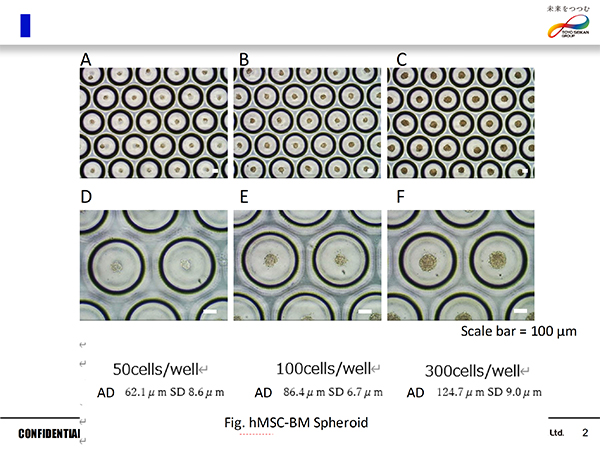
Uniform spheroid formation was confirmed in all wells, and round spheroids were formed within each well.
Please also refer to the application data. Note that the conditions vary depending on the cell type and culture conditions.
Culture conditions
For hMSC-BM spheroid formation, human bone marrow-derived mesenchymal stromal cells (hMSC-BM, PromoCell) were seeded at 50, 100, and 300 cells/well and cultured for 2 days using 20 mL of Cellartis® MSC Xeno-Free Culture Medium (+ supplement, Takara Bio Inc.) and WELLBAG-S500.
In studies using iPS cells, we have confirmed that seeding is possible from approximately 50 cells/well in general, up to approximately 500 cells/well with S500 and approximately 1,500 cells/well with S1260.
However, if the seeding density is too high, spheroids tend not to form properly.
Please use these values only as reference, as results vary depending on the cell condition and cell type.
In principle, centrifugation causes spheroids to come into close contact with one another, making them more likely to aggregate. In addition, during resuspension by pipetting after centrifugation, some spheroids may be disrupted. Therefore, transfer the spheroid suspension into a tube, allow it to settle naturally, gently remove the supernatant, and then wash by adding a washing solution such as PBS.
When removing the supernatant by natural sedimentation, large spheroids (approximately 200 μm or larger) will settle in less than one minute, whereas smaller spheroids may take more than 3 minutes.
If centrifugation must be used, we recommend gentle conditions such as 80 g for approximately 30 seconds.
If there are differences in the medium, holder, or working temperature while the cells are settling, thermal convection may occur inside the bag, which can cause non-uniformity. Therefore, we recommend equalizing the temperature of the medium, holder, and working environment to either room temperature or 37°C before allowing the cells to settle.
For example, if you are working at room temperature, we recommend bringing the medium and holder to room temperature in advance, placing the bag in the holder after seeding, and leaving it at room temperature for about 5–10 minutes to allow the cells to settle before returning it to the incubator.
Three years from the date of manufacture.