

Six-party—Kashima City, Ibaraki Prefecture (Mayor: Shinichi Taguchi), REFINVERSE, Inc. (President and CEO: Akira Ochi, Headquarters: Chiyoda-ku, Tokyo), Mitsubishi Chemical Corporation (President and CEO: Manabu Chikumoto, Headquarters: Chiyoda-ku, Tokyo), Toyo Seikan Group Holdings, Ltd. (President and CEO: Takuji Nakamura, Headquarters: Shinagawa-ku, Tokyo), Kewpie Corporation (President and CEO: Mitsuru Takamiya, Headquarters: Shibuya-ku, Tokyo), KASUMI CO., LTD. (President and CEO: Fumitaka Orimoto, Headquarters: Tsukuba City, Ibaraki Prefecture)—are working together on the "Pla-relay Project," which aims to create a circular system for plastic containers. From September 2025 to November 2025, they crushed, liquefied, and regenerated dressing caps and PET bottle caps collected in Kashima City, Ibaraki Prefecture. *1 We are selling a limited quantity of dressing products that use caps molded from recycled materials after the recycling process was completed, realizing a circular cycle from collection to remanufacturing and sale.*2
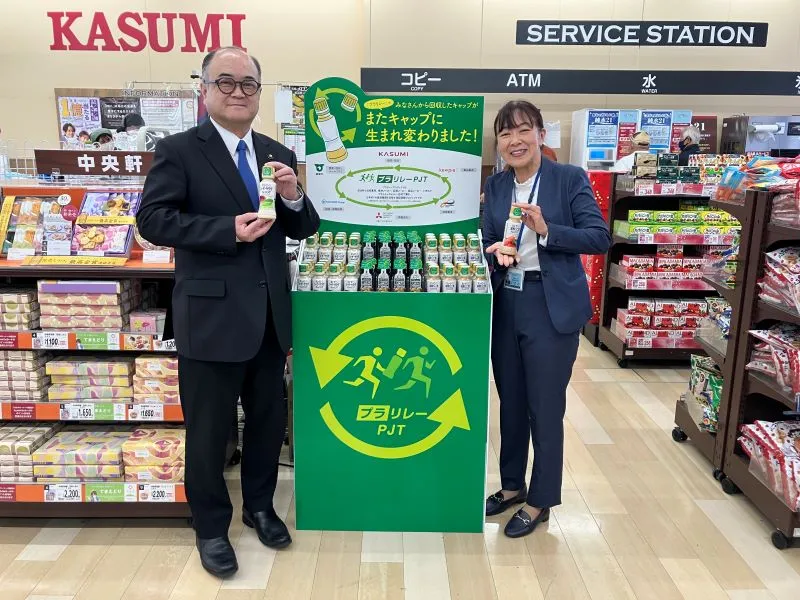
The products that feature the recycled caps are three types of Kewpie products: "Deep-Roasted Sesame Dressing," "Caesar Salad Dressing," and "Tasty Dressing Black Vinegar Onion," with only 100 bottles of each available. Sales began on Wednesday, April 22nd, at the "Pla-relay Special Shelf" next to the service counter at the Kasumi Kashima Stadium store.*3
*1: Resinized into PP (polypropylene) and PE (polyethylene) by Japan Polypropylene and Japan Polyethylene, both members of the Mitsubishi Chemical Group.
*2: This initiative employs the mass balance method. The mass balance method is a technique used when mixing petroleum-derived raw materials and chemically recycled raw materials to create a product, where the properties of the recycled material are assigned to a portion of the product according to the amount of recycled material used.
*3: Products with the Plastic Relay sticker will be displayed on the special shelves (they are not displayed on the regular shelves). Please note that the number of items sold, the period, and the sales location may change without notice.
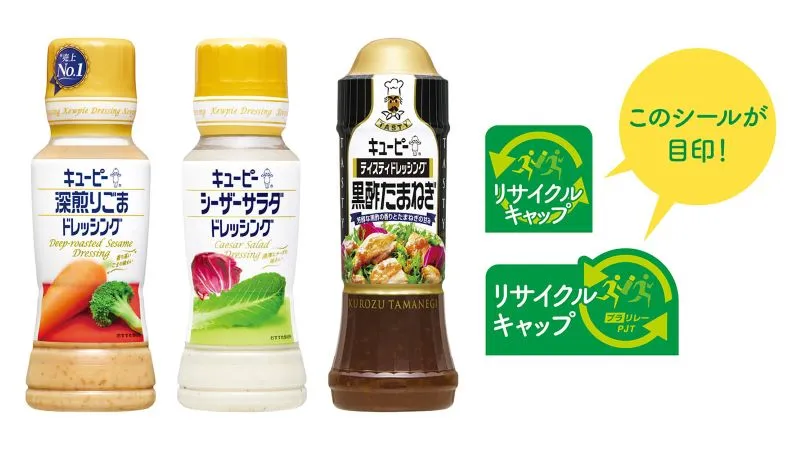
■Target products:
① Kewpie Deep-Roasted Sesame Dressing 180ml
② Kewpie Caesar Salad Dressing 180ml
③ Kewpie Tasty Dressing Black Vinegar Onion 210ml
(① and ② use recycled material in the inner stopper inside the cap, and ③ uses recycled material in the outer cap.)
■Suggested retail price, shelf life:
Same as the regular product
■Sales start date and location:
Available in limited quantities (100 of each) from Wednesday, April 22, 2026 at the special plastic relay shelf next to the service counter at Kasumi Kashima Stadium store.
This project aims to promote the circular economy of plastic containers within Ibaraki Prefecture. Based on a comprehensive cooperation agreement signed in February 2025 between six parties, including Kashima City in Ibaraki Prefecture, this demonstration project had each of the six parties contribute plastics in a relay-like fashion. Chemical recycling served as a new solution for used plastics (dressing caps and PET bottle caps) that had previously been mainly incinerated or discarded.*4 Using this method, recycled materials were adopted for food containers. By completing the entire cycle from collection to remanufacturing within the prefecture, we aim to become a model case for regional resource recycling.
*4: A recycling method that returns materials to oil, gas, and raw materials through a chemical decomposition process. Used plastics such as salad dressing caps and PET bottle caps can be recycled by returning them to chemical raw materials such as oil, gas, and monomers.
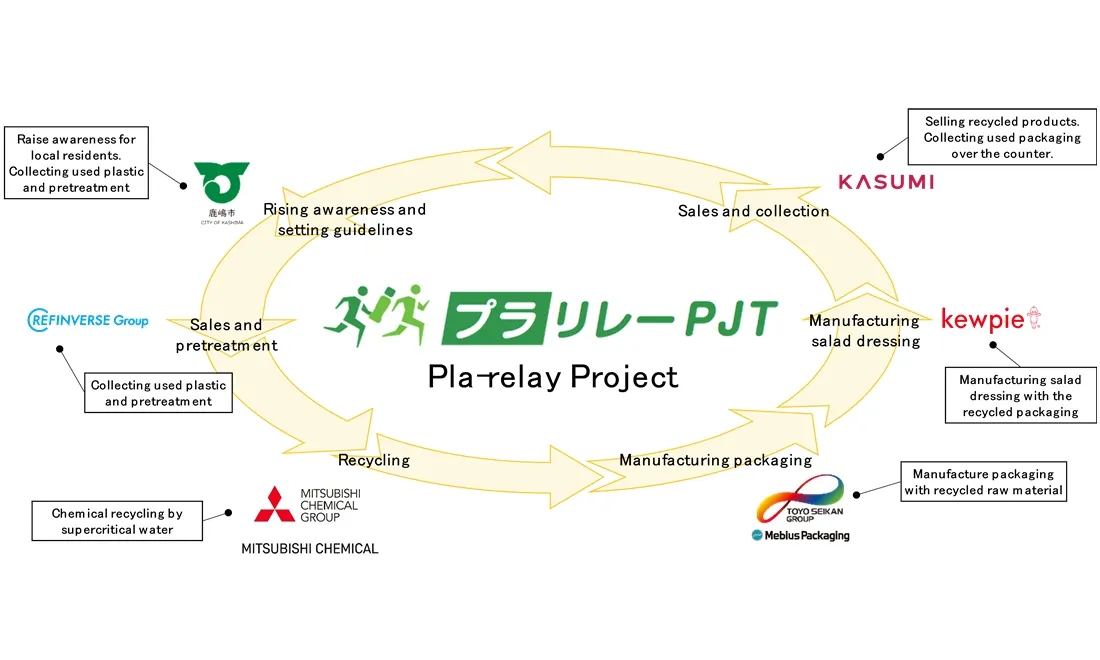
Since the project's launch in February 2025, the six parties have been discussing the challenges and solutions for plastic resource recycling. Specifically, regarding the "collection challenge," which involved raising awareness and encouraging citizens to properly separate and collect waste, and the "recycling challenge," which involved verifying the suitability of the condition and circumstances of the collected materials before reprocessing them into new products, each company implemented the following initiatives.
In chemical recycling, the key is to separate and collect resources. While some plastics, such as PE (polyethylene) and PP (polypropylene), are suitable for recycling, others, such as polyvinyl chloride, composite materials made by layering different resins and films, and materials containing non-plastic materials like metal and glass, are not suitable and are difficult to decompose just by appearance. When these materials are mixed together, it becomes difficult to regenerate the plastic. Furthermore, plastics that are heavily soiled have a higher risk of contamination by mold, bacteria, and insects. Separating and washing these materials during intermediate processing increases costs, so it is desirable to separate them as much as possible at the stage of collection from homes and businesses. Therefore, in this project, we implemented the following four initiatives.
1. Conducting a waste sorting workshop at Kashima City Takamatsu Junior High School.
2. Implementation of online classes (Kashima Kids Environmental Classroom) for elementary and junior high schools in Kashima City.
3. Collected salad dressing caps and plastic bottle caps at 14 elementary and junior high schools in Kashima City.
4. Dressing caps were collected at the Kasumi Kashima Stadium store.
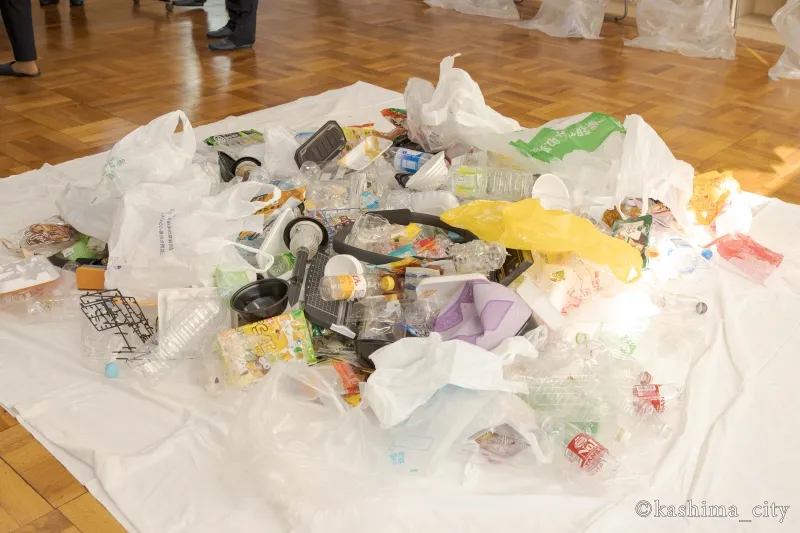
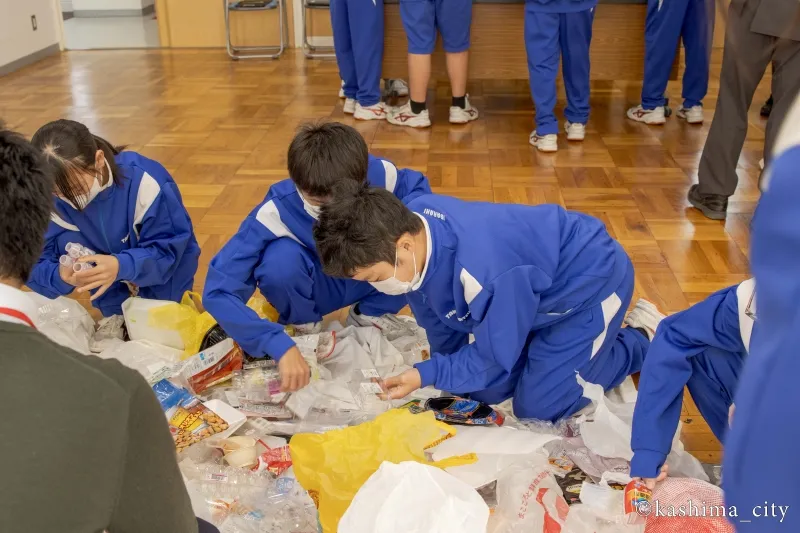
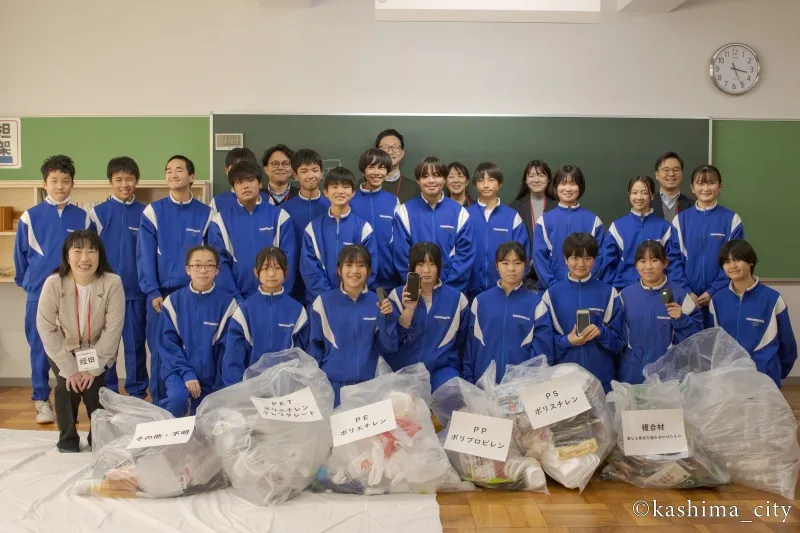
At the sorting workshop held at Takamatsu Junior High School, students sorted plastic waste they had collected at home into six categories: PE, PP, PET (polystyrene), PS (polystyrene), composite materials, and other. Many students said that they gained a deeper understanding of plastics by sorting them themselves, noting that even containers that look similar often have different materials depending on their use, manufacturing method, and distribution conditions, and that some products do not have material labels. Manufacturers also listened to user feedback such as "What is difficult for those sorting?" and reaffirmed the need for cross-industry collaboration on issues such as improving labeling and manufacturing methods that consider disposal. For more details about the workshop, please see the Kashima City website.
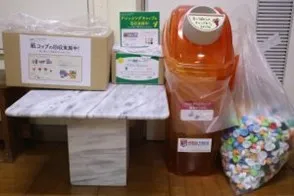
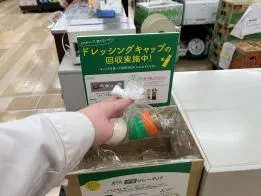
From September to November 2025, a total of 8.8 kg of plastic bottle caps were collected at elementary and junior high schools, as well as dressing caps collected at the same schools and the Kasumi Kashima Stadium store. After a chemical analysis, the materials were sent to Mitsubishi Chemical Corporation 's recycling plant.
The plastic resources used this time were collected from elementary and junior high schools in Kashima City and the Kasumi Kashima Stadium store, and were in good condition after being thoroughly washed at each household. Therefore, we were able to recycle the entire amount of collected resources without any problems.
On the other hand, based on insights gained from the workshop with Takamatsu Junior High School, contamination and soiling of materials are anticipated; therefore, we consider phased demonstration tests necessary, beginning in the initial stage with resources that are made of a single material and have many collection points—such as PET bottle caps—or plastic resources that are less likely to become soiled, such as secondary packaging. *5
*5: Outer packaging containers that do not directly touch the contents.
The purpose of launching Pla-relay Project was to establish a framework for realizing a closed-loop system within a specific region and to operate a complete circular cycle. This time, we were able to complete the process from collecting resources in Ibaraki Prefecture to remanufacturing and selling them, which is a great achievement. In the future, we plan to compile the challenges that have emerged during the process of raising awareness, collecting, recycling, manufacturing, and selling, as well as the feedback from stakeholders, into a "Verification Report on the Circular Economy of Plastic Containers."
Furthermore, discussions regarding future activity plans will continue among project stakeholders. Towards the realization of plastic recycling and sustainable living, the six parties will continue to fulfill their respective roles and promote activities.