

Our consolidated subsidiary Tokan Kogyo Co., Ltd. (Head Office: Shinagawa-ku, Tokyo; President & CEO: Hironobu Tanabe; hereinafter "Tokan Kogyo") has compiled the results of a paper food container collection demonstration experiment conducted from January 6 to March 31, 2026, at two resource collection stations "Econova" operated by Kobe City (Futaba and Azuma).
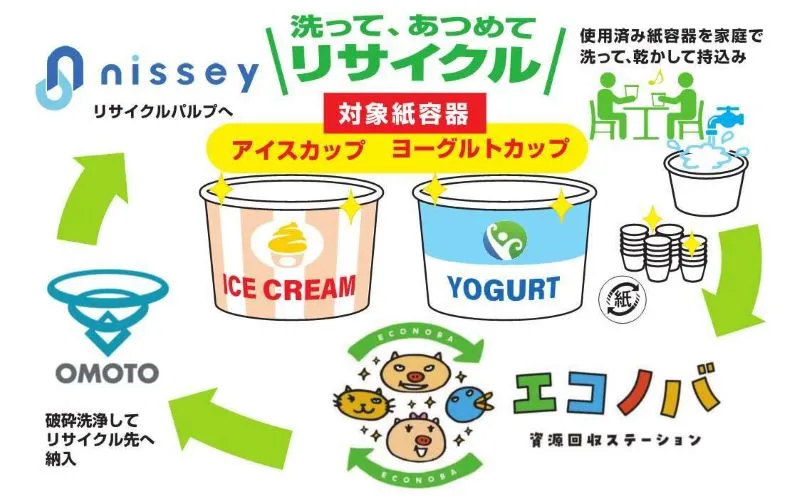
In this demonstration experiment, paper food containers used for ice cream and yogurt were cleaned and dried by citizens, who brought them in dedicated boxes for collection. We examined the quality and quantity of collected items, as well as citizens' recycling behaviors including cleaning conditions, and identified the effectiveness and challenges in creating a circular economy system.
| Implementation period | January 6, 2026 (Tue) - March 31, 2026 (Tue) (85 days) |
|---|---|
| Collection location | Econova Futaba (located within Futaba Gakusha, 7-1-18 Futaba-cho, Nagata-ku) Econova Azuma (Located inside Comicsta Kobe, 4-1-6 Azuma-dori, Chuo-ku) |
| Subject | Used ice cream and yogurt paper food containers that have been washed and dried at home. *Plastic products are not included. |
| Verification details | ① Evaluation of the quality and quantity of collected materials (percentage of items that meet the target criteria, degree of soiling and residue, presence or absence of odor, etc.) ② Effective methods for informing and raising awareness among citizens |
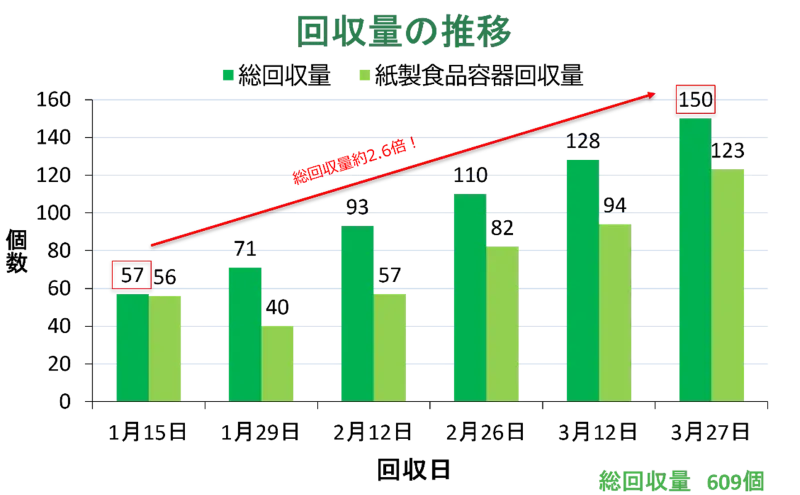
During the demonstration period, a total of 609 containers were collected, of which 452 paper food containers (74.2%) were collected. The collection volume showed an upward trend throughout the period, expanding approximately 2.6 times compared to the verification date, January 15, and March 27. Additionally, although a small amount of food residue was found on one of the collected paper food containers, otherwise, they met the quality standards suitable for use as recycled pulp raw materials, and there was almost no detected odor. It was of quality suitable for use as a raw material for recycled pulp, and there were almost no signs of food residue or odor. These results confirmed that proper cleaning and drying by Econova users are being conducted.
On the other hand, 157 items (25.8%) of the total collected items were excluded from this demonstration experiment, with about 80% being plastic yogurt containers. Based on the results of this demonstration experiment and previous collection demonstrations of paper food containers conducted by Tokan Kogyo, it is considered that support and proper guidance from on-site staff during sorting at collection sites handling multiple items, including Econova, are effective in improving the quality of collected items.
Furthermore, interviews with Econova staff highlighted the importance of visually clearly displaying items and sample displays to ensure more recyclable-quality recyclable items are recognized. Additionally, as a measure to raise awareness of these initiatives, it was found that combining multiple methods such as posting educational materials, distributing flyers, and announcing information at local events is effective.
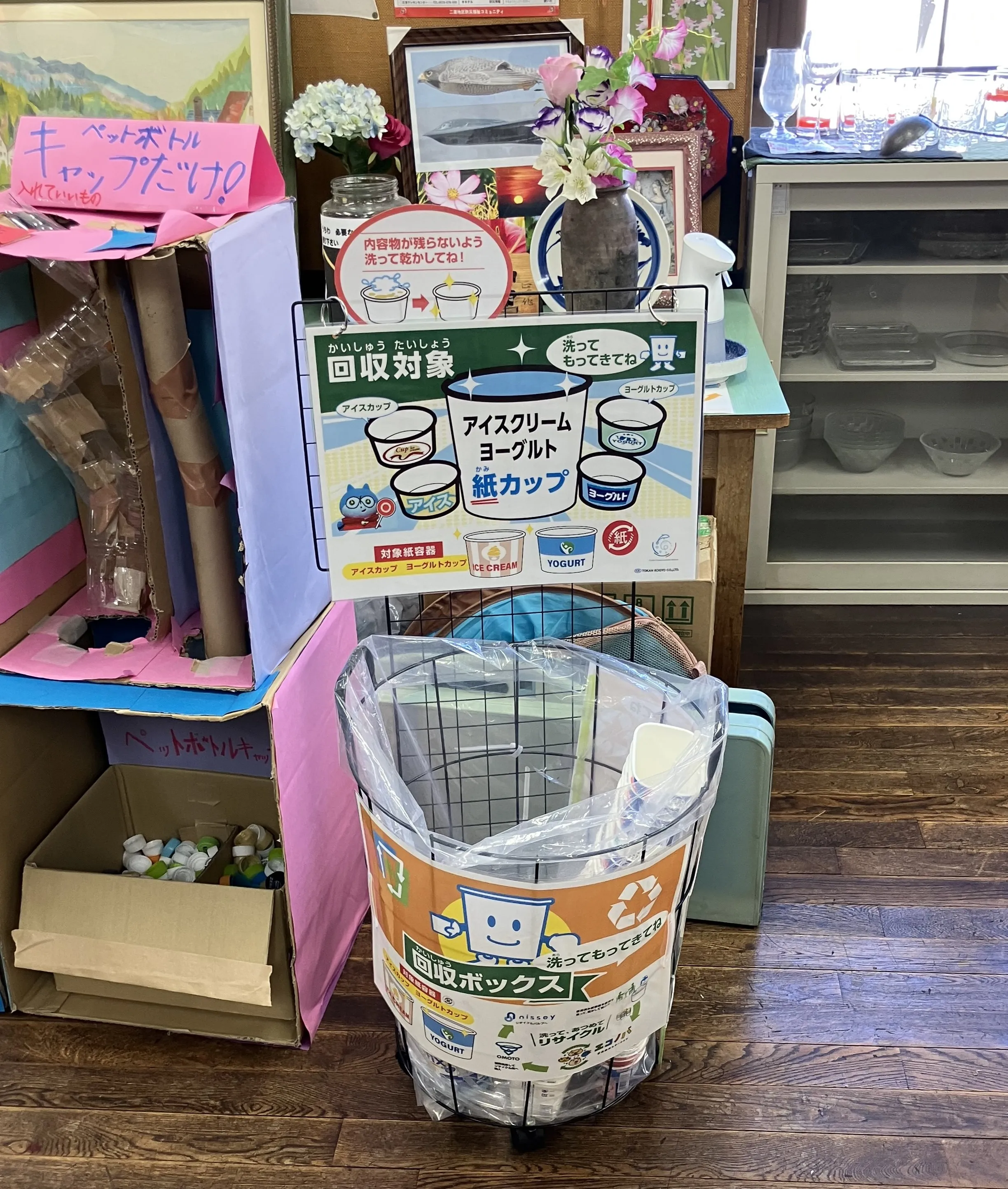
Tokan Kogyo and its partner companies (Oomoto Paper Materials Co., Ltd., Nissei Sangyo Co., Ltd., Amita Holdings Co., Ltd.) will further promote collection based on the results and challenges obtained from this demonstration experiment. In addition to raising awareness through awareness exhibitions, flyer distribution, and guidance at local events, we aim to reduce foreign object contamination through improvements to collection box slots and sample displays. Additionally, we will promote the expansion of collection points and collaboration with local businesses and brand owners, aiming to implement a social recycling scheme for paper food containers discharged from households. Tokan Kogyo will continue to create opportunities for more people to participate in circular economy on a daily basis, contributing to reducing combustible waste and realizing a circular economy by promoting understanding of sorting and recycling.
Since its founding in 1943, Tokan Kogyo has brought a wide range of packaging containers made from paper and plastic to the world. As a leading Japanese company, particularly in the field of paper cups, the company responds to a wide range of customer needs, providing environmentally friendly products that suit diverse lifestyles. To achieve this, the company's management philosophy is to "create products and systems that are in harmony with social needs and the natural environment, and contribute to the improvement of lifestyles and culture." To this end, the company will utilize the individuality and diversity of its employees, take on the challenge of "innovating" and "creating" packaging containers, and promote efforts to realize a sustainable society.